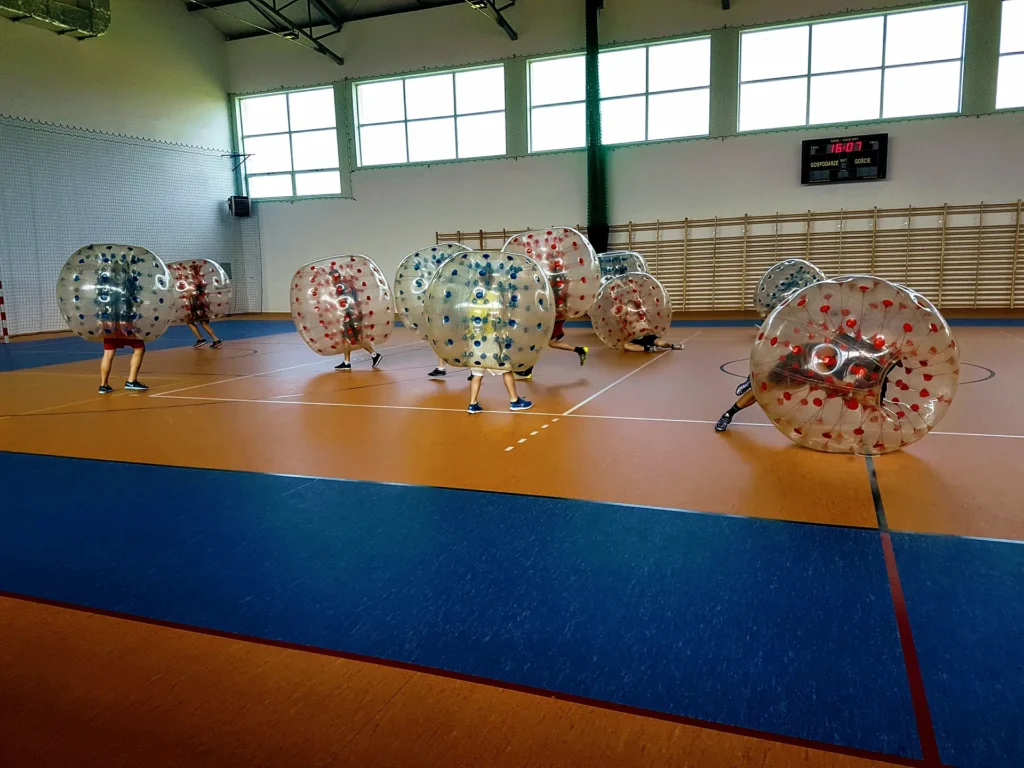
Giant inflatable balls, a run-up, a collision and a player lying on their back with their legs in the air – from the sidelines it looks dramatic. So is bumper ball safe? The short answer: yes, as long as you play sensibly and follow a few simple rules.
Since 2010 we have run matches for more than 7,800 clients. Here’s everything worth knowing about bumper ball safety: requirements, equipment, clothing and the rules we enforce on the pitch.
Why Is Bumper Ball Safe?
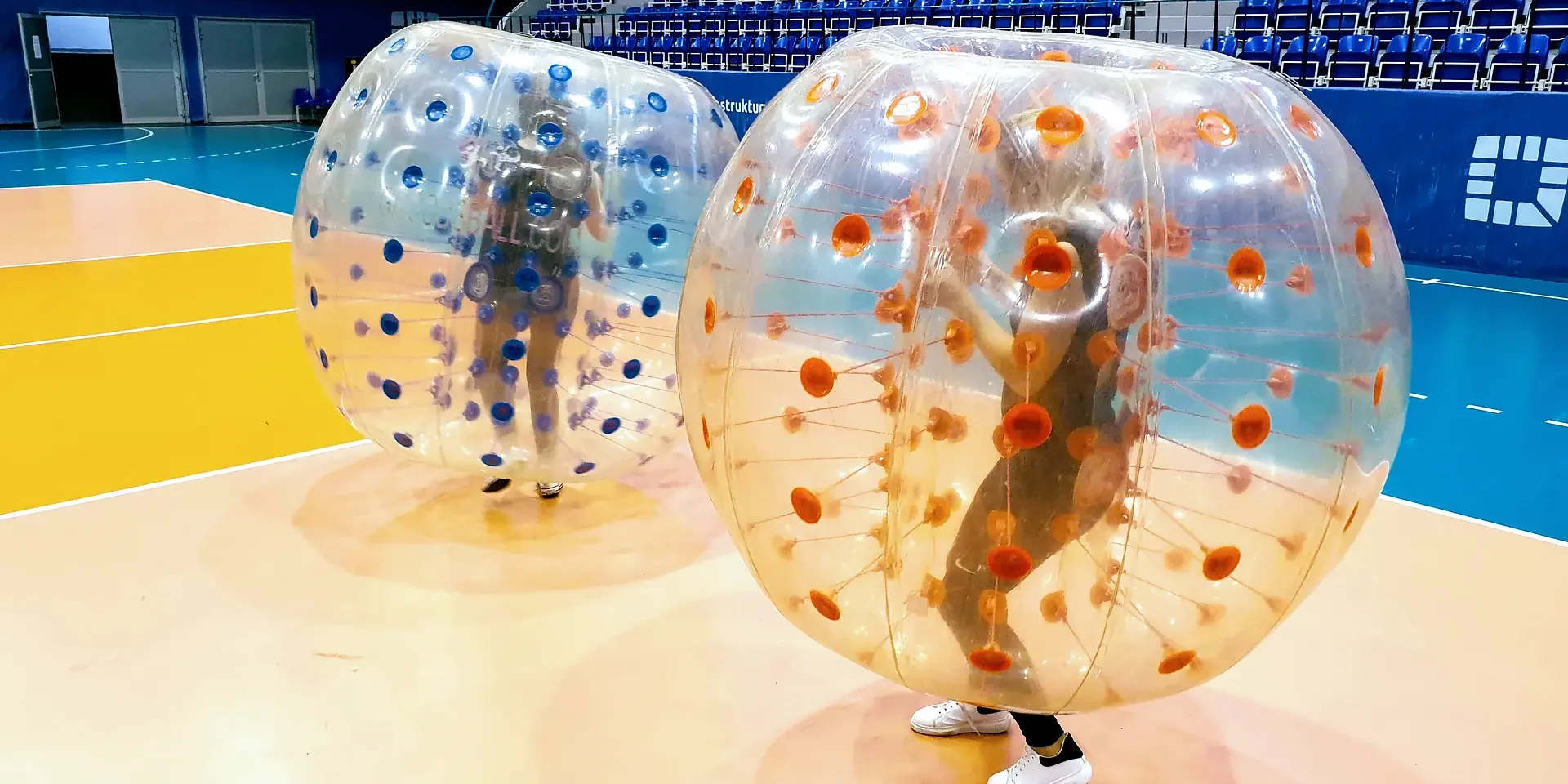
The ball protects the player from head to knees. A thick layer of air cushions collisions, and when you fall, the ball rolls with you. That’s why the risk of injury is lower than in a normal game of football – as long as everyone uses a bit of common sense.
Requirements – Who Can Play?
| Requirement | Value |
|---|---|
| Age | 10+ |
| Height (ball 1.5 m in diameter) | at least 150 cm |
| Height (ball 1.7 m in diameter) | at least 180 cm |
| Maximum weight | 100 kg |
We have two ball sizes: standard balls 1.5 m in diameter and two large balls 1.7 m in diameter for the tallest players. An inflated ball weighs about 10 kg.
How to Put the Ball On Properly
- Step inside the ball.
- Put the adjustable straps over your shoulders – like a backpack – and tighten them so the ball doesn’t shift while you run.
- Grab both handles at the front and hold them throughout the game.
Before every match we show you how to do it and check that everyone’s straps fit properly.
What to Wear
- Like for PE class – tracksuit bottoms or shorts and a T-shirt.
- Trainers – stable and laced, with clean soles for indoor halls.
- No jewellery or sharp objects – leave watches, earrings, keys and phones in the changing room.
- Glasses – if you wear them, it’s better to play in contact lenses.
7 Rules for Safe Play
- Play sober – save the alcohol for after the match.
- Hold the handles throughout the game, even when you fall.
- Don’t charge from behind or hit a player who’s down – the referee stops the game after any dangerous move.
- Check your straps – if they loosen, stop and adjust them.
- Play on flat ground – free of sharp edges, posts and obstacles that could damage the ball.
- Drink water – it gets warm inside the ball, especially in summer.
- Listen to the referee – they pick the games and enforce the rules.
When Is It Better Not to Play?
Skip the game or cheer from the sidelines if you’re pregnant, have a recent injury, back or heart problems, or simply don’t feel well. If in doubt, ask your doctor. A fan with a camera is worth their weight in gold!
Where Is It Safest to Play?
In winter we recommend a sports hall with a flat surface, and in summer an outdoor pitch or grass works great. We advise against playing in full sun around midday. Read more in our post Hall, Pitch or Beach? Where to Play Bumper Ball.
FAQ – Frequently Asked Questions
Can a ball burst?
It won’t burst or puncture by itself. The risk only arises with improper use or contact with a sharp edge – which is why we play on checked ground.
Can you breathe freely inside the ball?
Yes – there’s an open tunnel inside the ball, so air circulates freely. It does get warm, though, which is why water matters so much.
Who looks after safety?
An organiser stays with you throughout the game, looking after the balls and the rules. In the VIP package a referee and host runs the match and leads a professional warm-up.
Where to Start?
- Check that all players meet the height and weight requirements.
- Tell your group what to wear and what to leave in the changing room.
- Send the booking form – we’ll take care of the rest.
Questions about safety? Call +48 509 196 229 (Sylwester). You’ll find more answers in our FAQ.
Read also: